Why AI Is Faster Than Humans: From Data Access to Decision-Making
The Speed Advantage of Artificial Intelligence
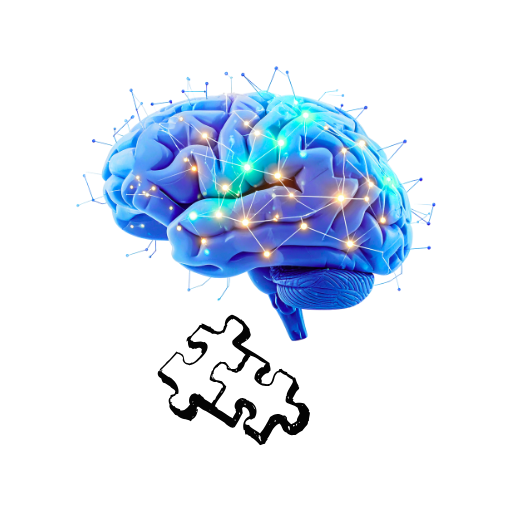
Humans think in sequences; AI thinks in parallel. The difference defines the modern technological revolution. While people must gather information, interpret it, and decide step by step, AI systems can access and process millions of data points simultaneously—without fatigue or bias.
This parallel capability allows AI to perform in seconds what would take humans hours or even days. From financial forecasting to medical diagnostics, speed is no longer a matter of human effort but of computational design.
Accessing and Organizing Massive Data Instantly
AI systems are built to connect with vast data sources—cloud databases, APIs, and historical archives—and retrieve structured and unstructured information instantly. Humans rely on memory, experience, and manual searches; AI uses indexing, embeddings, and semantic understanding.
When faced with a query, AI doesn’t just look up data—it interprets meaning, relevance, and relationships across thousands of sources at once. This gives it an unmatched edge in recall and accuracy.
Analyzing Complex Patterns Beyond Human Scale
Humans can only handle a few variables at a time; AI handles millions. Through advanced algorithms and neural networks, AI can detect correlations invisible to human reasoning, such as subtle patterns in lab data, behavioral trends, or environmental changes.
This analytical scale enables AI to make predictions, flag anomalies, and reveal insights that no individual—or even a team—could reasonably achieve in real time.
Connecting the Dots at Lightning Speed
AI doesn’t just analyze—it synthesizes. Machine learning models are capable of linking data points across domains: clinical notes, medical images, sensor readings, and text records. This allows AI to connect seemingly unrelated information and derive holistic conclusions.
Where a human might miss an indirect relationship or overlook data outside their specialty, AI bridges the gap instantly, making it a true decision-support powerhouse.
Learning and Adapting Faster Than Any Human
While humans learn through repetition and experience, AI learns through exposure to data—billions of examples compressed into a single training cycle. Reinforcement learning, feedback loops, and continuous retraining enable AI to improve autonomously.
This capacity for rapid skill acquisition allows AI to adapt to new data, domains, or challenges in a fraction of the time a human expert would need.
The Human-AI Synergy
AI’s greatest power is not replacing humans but expanding what humans can achieve. By handling computation, pattern recognition, and data retrieval, AI frees people to focus on creativity, empathy, and ethical judgment—the uniquely human strengths.
Together, humans and AI can achieve outcomes neither could reach alone: faster insights, better decisions, and a future where intelligence—human and artificial—work in harmony.
You Might Also Like

Why AI Isn’t Replacing Vets — It’s Making Them Superhuman
Worried that AI will replace veterinarians? Don’t be. It’s here to make your clinical life easier, faster, and a little more superhuman — especially if you’re a new grad still learning how to juggle chaos and compassion.
The Real Challenges of Veterinary Dental Charting — and How Scriptover Solves Them
Veterinary dental charting is complex, detailed, and time-sensitive. Learn why it’s so difficult — and how Scriptover’s AI-powered workflow now streamlines the process.
Will Robots and AI Kill Vets — or Make Them Gods? (Dark Thoughts Ahead)
As robotics and AI accelerate toward the singularity, what happens to veterinarians? A dark yet fascinating exploration of the future where machines diagnose, heal, and maybe even empathize.